How fast can a human run 100 miles?
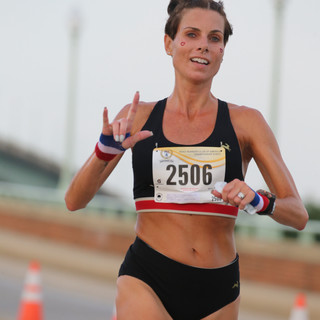

Zach Bitter has been asking himself the same question since 2013, the year he broke the American record for the 100 mile. He briefly turned that into a world record in 2019, and it's held as an American record ever since. His average pace that day was 6:47 per mile, or roughly four consecutive sub-three-hour marathons back to back. "How fast can you run a hundred miles when you tried to optimize for it," he says, describing the question that's kept him locked in on the same flat, runnable courses for over a decade. He's never fully answered it. He's not sure he wants to.
That obsession with optimization shows up everywhere in how he trains. Zach breaks his intensity work into two buckets: short intervals tied to VO2 max, done at a 1:1 work-to-rest ratio between thirty seconds and four minutes, and long intervals at lactate threshold, done at a 2:1 ratio and stretching six to fifteen minutes. He used to think almost everything needed to be run-specific. Lately he's opened up to doing some of that short interval work on the bike instead, since the mechanical trade-off is smaller than he once assumed, and it reduces injury risk heading into the more specific, higher-mileage phase of a build.
He's also become the coach who looks for the gap. When a new athlete sends him their training history, he's checking for one intensity zone they've quietly ignored. Ultra runners who came up just wanting to log long hours in the mountains often have almost no separation between their aerobic threshold pace and their lactate threshold pace, because they never trained the top end. Marathoners tend to have the opposite problem. Either way, the fix is usually obvious once you see the gap on paper, and that's the part of coaching he seems to enjoy most.
The mental side gets just as much attention. Zach describes two very different tools depending on the moment. Mid-interval, when doubt shows up and quitting starts to feel reasonable, the move is to zoom in: focus only on the next rep, get honest about whether you're actually at your limit or just hearing your brain look for an exit. But after a bad workout, the instinct to overhaul everything is exactly backwards. That's when you zoom out and ask whether one rough session is really the trend, or just a single data point in a much longer block.
He needed that same instinct this spring, for something far more serious than a bad interval session. About a week and a half into taper for a hundred miler in Milwaukee, he went out for an easy shakeout run and noticed his left calf tightening. He assumed a strain. By the next morning it was worse, and it wasn't presenting like any strain he'd had before: constant swelling, a low dull ache that didn't come and go with movement. His sister, a nurse, was the one who pushed him to go get it checked. An ultrasound found a clot running from his ankle to his mid-thigh. He was sent straight to the ER.
It turned out to be a partial blockage, caught early enough that he avoided the more serious outcomes, but it still meant blood thinners, a full pull from the race, and weeks of uncertainty about whether there was some underlying genetic factor at play. He's since been cleared to bike, and then to run again, and he's cautiously eyeing Tunnel Hill in November if the buildup stays clean.
What's struck him most, looking back at both this and the smaller setbacks along the way, injuries, a pollen allergy that quietly derailed a training block earlier this year, is how much they've reinforced the same lesson he keeps coming back to on a podcast full of people doing extreme things: an authentic reason for doing this, something outside of pure performance, is what actually holds up when a race doesn't happen the way you planned.Hear the full conversation on the Maybe Running Will Help? Podcast here.


Comments