What 100 Miles Can Teach You About Doing Hard Things
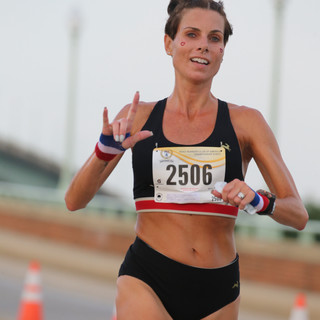
Claire Forsyth wasn’t the kid everyone expected to become an ultrarunner. She wasn’t particularly sporty growing up, and when no one else in her class wanted to run the 1500 meters at a school sports day, she volunteered mostly so her class could get the points. She came in last.
Running didn’t become a meaningful part of Claire’s life until much later. She ran the Great North Run for charity in 2013, finished feeling completely broken, returned to the race the following year, and then stopped running altogether for several years. When she picked it back up in 2018, finding an online running community helped her stick with it, and eventually she started wondering what else she might be capable of.
That question has now taken her all the way to 100-mile ultramarathons.
On Maybe Running Will Help?, Claire joined Nicky to talk about how she went from half marathons to ultrarunning, why she loves being at the back of the pack, what she has learned from races that didn’t go as planned, and how doing hard things through running has changed the way she approaches challenges in the rest of her life.
Finding Her Place in Long-Distance Running
Claire discovered trail running in 2022 almost by accident. She was scrolling through races when an ultramarathon popped up, and despite having never run trails before, she decided to enter. About a week later, she found another one and signed up for that too.
As the distances grew, Claire realized that longer races suited her much more than shorter, faster events. Part of that came from the sense of adventure, but she also appreciated the way the focus changed once she moved away from road racing. Instead of every conversation revolving around finishing times and mile pace, trail and ultra events felt more focused on how far you could go and what you could experience along the way.
For Claire, who describes herself as a back-of-the-pack runner, that shift made running feel more inclusive. A long day on the trails also gives her the freedom to move at her own pace, stop to take pictures, eat some snacks and enjoy places she might never otherwise see.
There’s also something uniquely satisfying about experiencing an entire day, and sometimes more than one, on your feet. As Claire pointed out, not everyone gets to watch the sun rise and set twice during the same race.
Learning From the Races That Didn’t Go to Plan
Claire’s progression into ultrarunning hasn’t been a perfect string of finish lines. Her first two ultras in 2022 both ended in DNFs, including one race where she made it to 100K before timing out only nine miles from the finish. She has had other races end early since then, including a 100-mile attempt where horrific weather played a major role.
Those experiences have become part of how she has learned to race longer distances. Each one has taught her something about taking care of her feet, handling difficult weather, recognizing what her body is telling her and understanding the difference between a problem that requires stopping and the discomfort that inevitably comes with being on your feet for an enormous amount of time.
Returning to a course after a DNF can also give you something you didn’t have the first time: experience. You know more about what is coming, where things might get difficult and how you responded the last time you were there. Claire has learned that sometimes the moment when you think you’re finished isn’t actually the limit of what you can do.
“You take it on the chin, you go back out and you show yourself that you can do it.”
There’s a Lot More to 100 Miles Than Running
The physical training required for a 100-mile race is only one part of getting to the finish. Claire quickly learned that there is an entirely different challenge in figuring out what you might need when you’re 50, 80 or 90 miles into a race.
Drop bags need to be packed with weather, food, clothing and footwear in mind, all while trying to predict what exhausted future-you might want many hours later. There may be mandatory gear requirements and weight limits to consider, and the weather can completely change the race no matter how carefully you prepared.
One year, Claire dealt with 13 hours of torrential rain that left runners battling soaked feet. The next year brought sunshine and an entirely different set of concerns. Her approach is to train in enough different conditions that a rainy race day doesn’t become the first time she has had to figure out how to keep moving when the weather turns.
Then there’s the lack of sleep. After enough hours on the course, Claire says, “Bushes become dinosaurs.”
For all the difficult parts of ultrarunning, though, Claire’s stories also make it sound like a surprisingly good time. During one 100-miler, she found herself dancing at an aid station at two in the morning. At another race, roughly 40 hours into the effort, she and other runners were doing party dances at one of the final aid stations before heading out to finish the last few miles.
When Nicky mentioned hearing that the back of the pack is where the party is, Claire immediately agreed. There’s music, glitter, sparkles and plenty of time to talk to the people around you, which is a side of ultrarunning that doesn’t always make it into the highlight reels.
The Confidence to Do Hard Things
For Claire, the biggest thing running has given her might not have anything to do with distance. Each time she has pushed herself farther, returned after a difficult race or attempted something she wasn’t completely sure she could finish, she has built a little more confidence in her ability to take on something hard.
“I think it does just give you that confidence that you can do hard things sometimes,” she told Nicky. “We always say that we’re not good enough for something or we can’t do something.”
That confidence has started showing up outside of running, too. Claire has taken on additional qualifications for work, completed personal training education and enrolled in a sports and exercise science degree. She didn’t pursue a degree when she was younger and instead went straight into work, but the confidence she has developed through running helped her feel ready to take on another challenge.
It’s one of the most interesting things about endurance sports: you can start because you want to see how far you can run and end up changing the way you think about what you’re capable of everywhere else.
You Don’t Have to Run 100 Miles
Claire may be the person signing up for multiple 100-milers and casually adding a half marathon between them, but her message isn’t that everyone needs to become an ultrarunner. The challenge that pushes someone outside their comfort zone could just as easily be a first 5K, a hike up a mountain or showing up to a running event when they’re worried they won’t fit in.
For anyone who feels intimidated by the running community, Claire encourages them to remember that every runner has been the new person at some point. The people at the front of the race are also only a tiny piece of what the running community actually looks like. Behind them are runners of different speeds, experience levels and backgrounds, including plenty of people who are simply trying to find out what they can do.
Sometimes that means running 100 miles. Sometimes it means getting yourself to the starting line for the first time. Either way, there’s something powerful about doing the thing you weren’t completely sure you could do and realizing afterward that you were more capable than you gave yourself credit for.
And maybe running will help you figure that out. Listen to the full episode of Maybe Running Will Help? here.


Comments