What a pro marathoner wants beginners to know
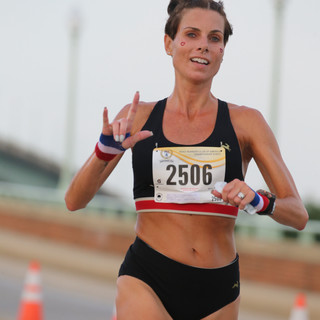
Rory Linkletter runs marathons for Puma, coaches runners of every level through Let's Tango, and made the 2024 Olympics. But most of what he talked about on this episode has nothing to do with elite talent, and everything to do with mindset shifts that apply just as much to someone training for their first 5K as to someone chasing an Olympic trials qualifier.
The biggest one: don't be afraid to fail in a workout. Rory says this is the thing he sees hold people back the most, at every level he coaches. Someone will have a goal pace for a tempo run and won't even attempt it because they're not sure they can hold it. His answer is blunt: what's actually the worst that happens? You run some of the miles slower than planned, or you have to stop early. That's not failure, it's information. "It's a fear of consequence where it's not real," he says. "It's anxiety. It's not a real fear." If you never let yourself attempt something you might not finish, you'll never find out what you're actually capable of.
That same principle shows up in how he thinks about ceilings people set for themselves. Rory picked up cycling casually this summer and caught himself immediately wondering if he could make the Tour de France, which he knows is unrealistic, but the instinct itself is the point. Most beginners do the opposite: they assume a modest goal because of their age, how long they've been running, or what people around them have accomplished, and they never let themselves think bigger than that starting point. He tells the runners he coaches who set conservative goals for themselves to raise the ceiling, not lower it, and let the training tell them where the real limit is.
If you're wondering whether to chase a specific time or compete against the people around you, Rory's answer is both, in sequence. He picks a pace group and a time goal going in, because having a number gives structure to the buildup. But once the race starts, his actual focus shifts to racing whoever is around him. He finds that pushing against another person, even briefly, pulls more out of him than a number on a watch ever does. This works at any pace. Passing the person who's five feet ahead of you at mile 10 doesn't require professional speed, just a target.
He's also a big believer in sprinting, even in the middle of marathon training, which surprises a lot of runners who assume speed work is only for shorter distances. He does 6 to 8 short sprints, twice a week, year-round. His reasoning: marathon pace never asks your body to use its full range of motion or produce max power, so if that's all you train, you never develop it. Sprinting forces your body to find its most efficient movement pattern under real stress, and that efficiency shows up in every other pace you run, including the one you actually race at.
On race day itself, Rory has learned to read his own effort by checkpoint. Mile 15 is his early tell: if things are already falling apart there, it's going to be a long day. Mile 20 is the point of no return, where whatever kind of day he's having is the day he's stuck with. Knowing those checkpoints ahead of time doesn't make the hard parts easier, but it does mean he's not surprised by them, and he's not panicking the moment things start to hurt.
Maybe the most useful thing he said, though, was about coaching itself. Rory doesn't believe in a single right way to train. Some people need someone to push them harder. Others, like him, mostly need someone to hold them back. Some runners want total structure down to the exact mile. Others do better with flexibility and room to adjust in the moment. None of that is about talent level, it's about knowing yourself well enough to figure out what actually works for how you're wired, and then finding a coach, a plan, or a training partner that fits that instead of forcing yourself into someone else's system.
Hear the full conversation on the Maybe Running Will Help? Podcast here


Comments