Why We Say Things on a Run We'd Never Say Sitting Still
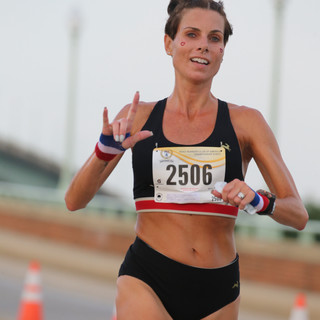

Okay, so I have to tell you how I found Sepideh.
I was recording a totally different episode with a psychologist (Dr. Mitch Greene) about mind chatter and how we get in our heads before races, and somehow we landed on the topic of running as therapy. I asked him if we should be careful about using running as a replacement for actual therapy. He told me about a book called Running Is My Therapy, which I ordered before we even hung up, and he mentioned there's real research showing that movement changes your brain chemistry. That sent me straight to Sepideh (who was mentioned several times in the book).
Sepideh Saremi is a licensed clinical social worker, an executive coach, and the founder of Run Walk Talk®. She's been walking with therapy clients since 2012 and running with them since 2017. Her training program has now put around fifty practitioners through it, and they're spread across more than twenty states plus Puerto Rico, Switzerland, and Australia.
I asked her why we open up so much more on a run than we would in a normal conversation, and she had an answer ready that made total sense to me. First, we're not making eye contact. You'd think eye contact makes things more intimate, but it actually makes us more guarded, because we're watching the other person's face for judgment. Take that away and it's basically a confessional. You can just talk. Second, moving your body forward through space quiets the anxious parts of your brain. You're calmer, so you're not sitting there scanning someone's reaction the whole time. Third, running is cognitively demanding. Your brain is busy keeping your body coordinated, so there's just less room for what Sepideh calls garbage thoughts, all those looping insecurities that usually crowd out anything honest.
I told her this explains so much about me. I get a little socially anxious, and if someone is really looking at me while I talk, my mind goes completely blank. On a run, none of that happens. I'm somehow more myself.
She made an important distinction too. Running is therapeutic, but it isn't therapy. Therapy is relational, it's what happens between you and a trained person who brings a particular kind of care and guidance. Running alone gives you a lot of the same benefits, more creativity, more calm, quieter self criticism, but it's not a replacement for the real thing.
When she trains other therapists, she teaches Run Walk Talk® on three levels. Method is the logistics, how far, how long. Modulator is what's happening in your nervous system and brain. And metaphor is the story you tell yourself about who you are as a runner. She thinks that third one gets ignored the most. If you get curious about how you engage with your own running, it can tell you a lot about yourself, and you can actually change that story on purpose.
We also got into something I bring up a lot on this show, the difference between road runners and trail runners. Road runners tend to be obsessed with pace and PRs, trail runners tend to just want to finish. Sepideh's theory is that trail runners get more consistent exposure to nature, and nature puts your nervous system into something researchers call soft fascination, a relaxed kind of attention you don't really get on a road surrounded by cars and buildings. She left me with a question. Is the way you're moving making your life bigger, or smaller?
Sepideh's dream is simple. She wants a day when she tells someone what she does and they say, oh yeah, my therapist does that too, instead of acting like it's some wild new idea. Given everything she told me, I think that day is coming faster than she realizes.
If you want to find a Run Walk Talk® practitioner or you're a therapist interested in getting trained, head to runwalktalk.com. New training cohorts start later this summer, and the newsletter on the site is the best way to get first access. You can also follow along on Instagram @runwalktalk.
Go listen to the full episode. This one changed how I think about every run I've taken since.


Comments